

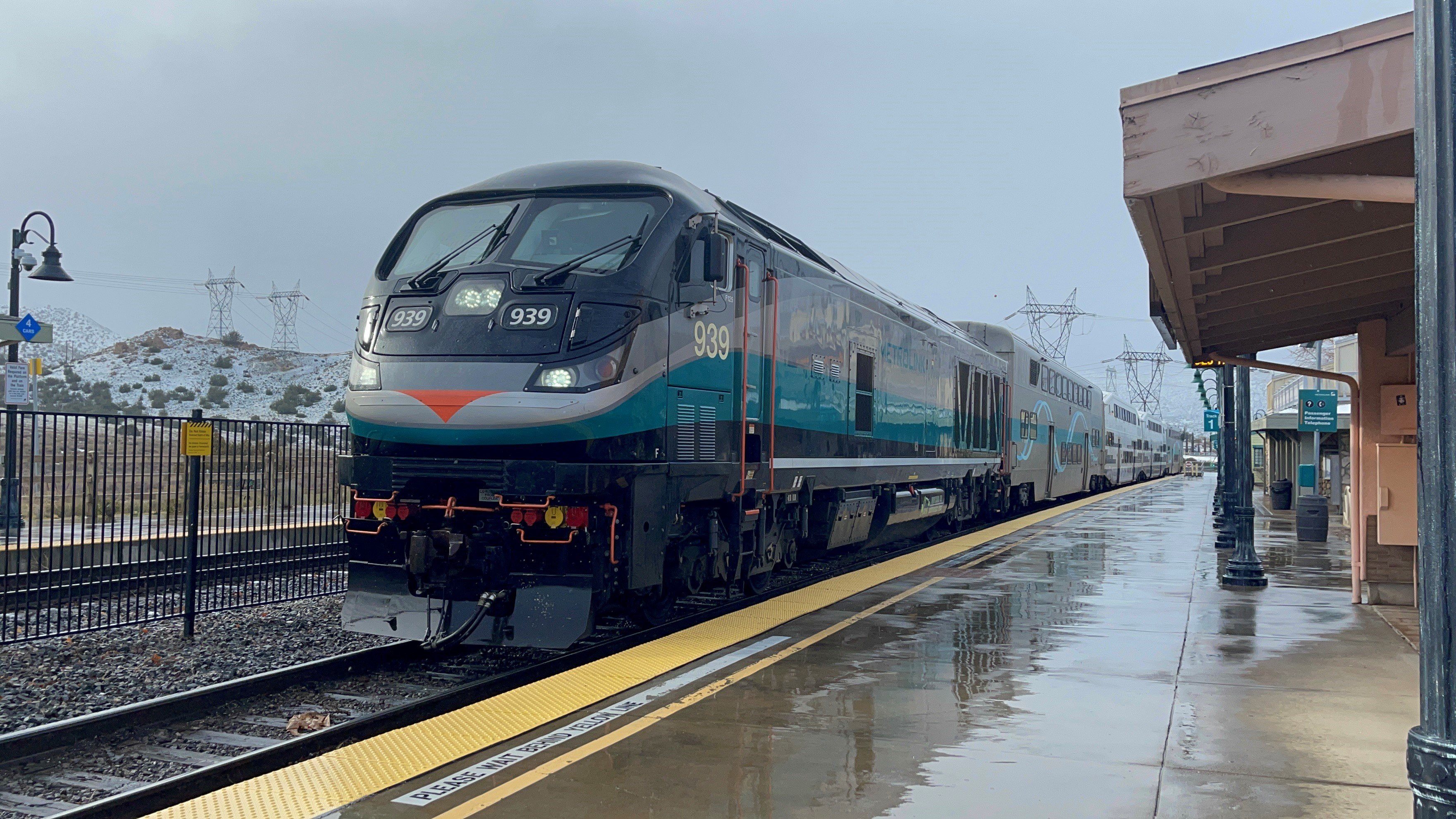
Metrolink trains operate for passengers, come rain or shine. Photo by Metrolink rider Marc C.
When severe weather swept across Southern California in late December, Metrolink faced a series of challenges that tested the regional rail network's resilience. Heavy rain, strong winds, flooding, downed trees and power lines, and rare weather events, including multiple sinkholes and a confirmed tornado, created hazardous conditions across the system during one of the most stressful travel periods of the year. Throughout the storm, Metrolink remained focused on safety, clear customer communication and service continuity, supported by strong coordination with track and signal maintenance contractor Herzog, whose proactive preparation and rapid response were instrumental in navigating these extreme conditions.
Ahead of the storm, Herzog deployed inspectors and foremen across all subdivisions, strategically staged heavy equipment and resources, and ensured crews were prepared to respond quickly to flooding, debris and right-of-way obstructions. Backhoes, loaders and other critical tools were positioned for rapid deployment, and resources were placed on standby to address anticipated risks. This advanced planning closely aligned with forecasted conditions and helped minimize service impacts as weather conditions deteriorated.
These efforts were further strengthened through close coordination with Metrolink teams, including track, signal and communications. Together, they implemented comprehensive weather preparedness protocols to protect customers and personnel while getting riders where they needed to go. Enhanced battery systems, backup power and network connectivity upgrades helped safeguard critical infrastructure during power outages, while thorough inspections during and after the storm ensured the system was safe for service.
Metrolink is grateful for the collaborative partnership and dedicated commitment of Herzog crew members during this challenging period. As Southern California continues to experience more frequent and intense storms, these relationships remain essential to maintaining a safe and dependable regional rail system.