

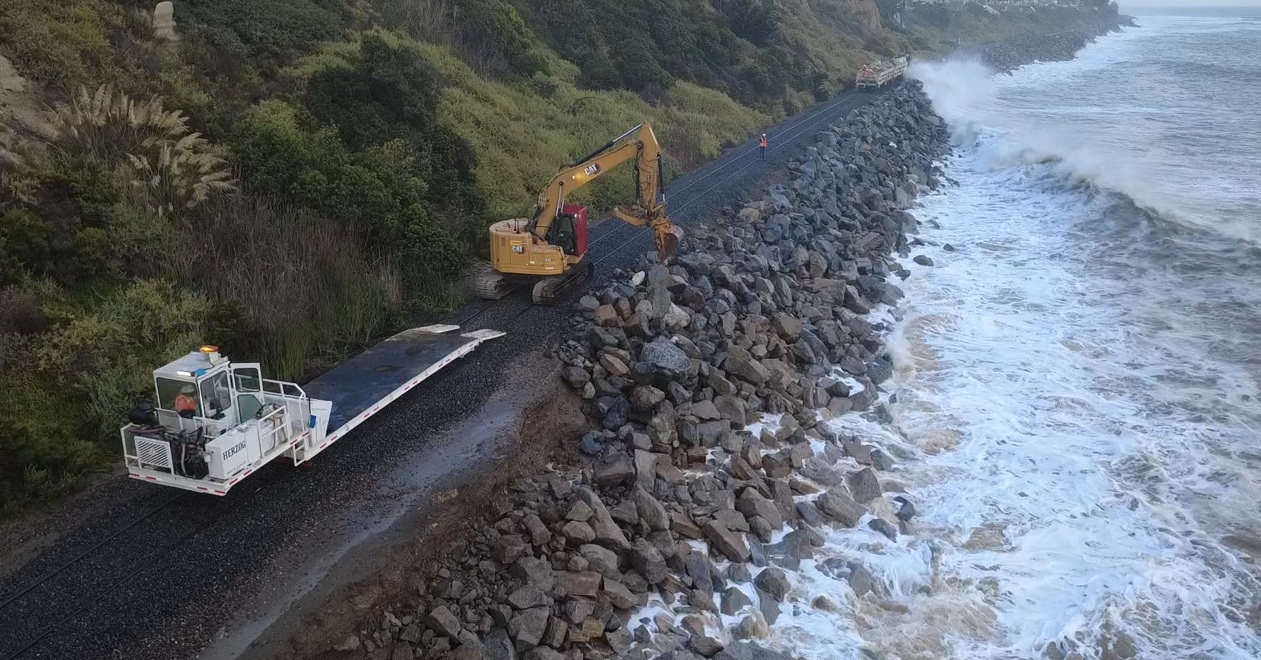
Crews continue work to shore up the coastal rail corridor.
For a regional rail system spanning six Southern California counties, anticipating and responding to severe weather is a year-round responsibility. From heavy rainfall and hillside instability to coastal erosion, high surf and elevated tides, changing conditions can pose significant challenges to railroad infrastructure and operations. That's why Metrolink takes a proactive approach to weather preparedness, monitoring forecasts, inspecting vulnerable areas, coordinating with regional partners and planning measures to protect the railroad and minimize potential service disruptions.
That preparation has been especially important along the South Orange County coastline, where elevated tides, high surf and coastal erosion can threaten tracks and interfere with railroad signaling systems. Waves washing over the tracks, accumulated debris and saltwater intrusion can affect infrastructure and cause signals to require trains to slow down or stop. These conditions may necessitate additional inspections, temporary speed restrictions or other operational safeguards. Metrolink teams closely monitor tide forecasts, surf conditions and vulnerable infrastructure, coordinate with the Orange County Transportation Authority (OCTA) and other regional partners, and position personnel, equipment and materials near affected areas to support a timely response. These precautions help protect passengers, employees and railroad infrastructure while minimizing potential service disruptions.
Sometimes, the most effective preparation means adjusting service before conditions deteriorate. Metrolink has proactively suspended Orange County Line service between Laguna Niguel/Mission Viejo and Oceanside on multiple occasions in anticipation of elevated tides and other weather-related conditions. Rather than risk sudden interruptions along the coastal corridor, these temporary adjustments have allowed trains to operate on a more consistent schedule between Los Angeles Union Station and Laguna Niguel/Mission Viejo, providing greater certainty for customers traveling elsewhere on the line. These decisions reflect an important operational principle: taking measured action in advance can prevent localized challenges from affecting thousands of additional riders.
Metrolink's weather preparedness efforts extend beyond the coastline. Throughout the system, maintenance and operations teams monitor potential threats to tracks, bridges, drainage systems, signals and surrounding hillsides. Preventative maintenance, additional inspections when warranted, enhanced monitoring during severe weather and advance planning for personnel, equipment and materials help Metrolink respond effectively as conditions change. Teams across maintenance, dispatching and train operations also work closely with regional partners to assess emerging concerns, adjust train operations when necessary and address infrastructure impacts. Whether facing an approaching storm or an exceptionally high tide, these preparations help employees make informed decisions, implement appropriate safeguards and restore normal operations as safely and efficiently as possible.
While customers may never see much of the work taking place behind the scenes, proactive weather preparedness is essential to delivering safe and dependable regional rail service. By identifying vulnerabilities, coordinating resources and making informed decisions before conditions deteriorate, Metrolink continues to strengthen the resilience of its network, minimize service disruptions and provide customers with greater confidence in their travels, regardless of what the forecast brings.